
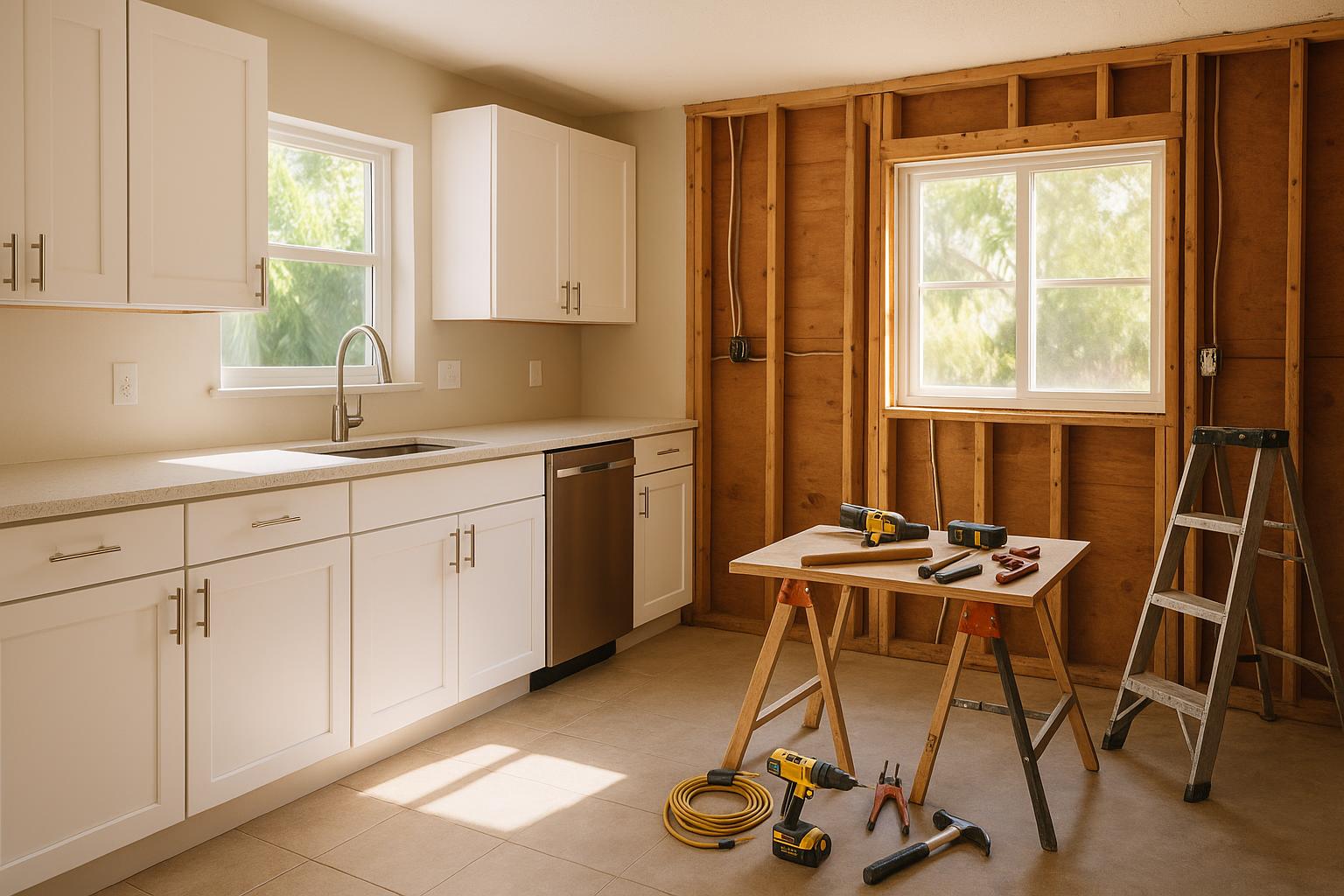
Why Knowing the Remodeling Process Matters
You've made the decision to remodel your home. Maybe it's a kitchen that hasn't been updated since the early 2000s, or a bathroom that's finally showing its age. Either way, the excitement is real — but so is the uncertainty.
One of the biggest reasons Fort Lauderdale homeowners hesitate to start a renovation is simply not knowing what the process looks like. How long will your home be disrupted? When do you need to make decisions? What happens if something unexpected comes up behind the walls?
At Landmark House Construction, we walk every client through the remodeling process before a single tile is removed. Here's a transparent, step-by-step look at what happens during a typical home remodel so you can go in feeling confident instead of overwhelmed.
Step 1: The Initial Consultation
Every project starts with a conversation. During the initial consultation, we visit your home to see the space in person, talk about your goals, and understand your budget range. This isn't a sales pitch — it's a genuine assessment of what's possible and what makes sense for your situation.
We'll ask questions like:
- What do you love and hate about the current space?
- How do you use the room on a daily basis?
- Do you have a design style or inspiration photos in mind?
- What's your ideal timeline for completion?
This meeting usually takes about an hour and gives us everything we need to start putting together a plan.
Step 2: Design and Planning
Once we understand your vision, we move into the design phase. This is where your remodel starts taking shape on paper. Depending on the scope of your project, this phase may include layout changes, material selections, fixture choices, and cabinetry design.
For Fort Lauderdale homes — many of which were built decades ago — this is also when we assess any structural considerations. Older plumbing, outdated electrical systems, and building code requirements specific to Broward County all factor into the plan.
We present you with a detailed proposal that includes the full scope of work, a materials list, a cost breakdown, and a projected timeline. Nothing moves forward until you're completely comfortable with the plan.
Step 3: Permits and Approvals
Many homeowners don't realize that most remodeling projects in Fort Lauderdale require permits — especially if plumbing, electrical, or structural work is involved. Skipping permits might seem like a shortcut, but it can lead to serious problems down the road, including fines and complications when you try to sell your home.
We handle the entire permitting process for you, from submitting applications to the City of Fort Lauderdale or the relevant municipality to scheduling required inspections. This step can take anywhere from a few days to a few weeks depending on the project and the local permitting office's workload.
Step 4: Demolition Day
This is when things get real. Demolition is the most dramatic phase of any remodel, and it's often the most exciting for homeowners. Old cabinets come out, worn flooring gets pulled up, and outdated fixtures are removed.
We take precautions to protect the rest of your home during demolition. That means sealing off work areas with plastic barriers, covering floors in adjacent rooms, and managing dust and debris carefully. Our crews clean up at the end of every workday — your home won't look like a construction zone outside of the project area.
Demolition also serves as a diagnostic moment. Once walls are opened up, we can see the true condition of plumbing, wiring, and framing. If we discover anything unexpected — like water damage or outdated wiring — we'll discuss it with you immediately and adjust the plan as needed.
Step 5: Rough-In Work
After demolition, the behind-the-scenes work begins. This phase is called the rough-in, and it includes:
- Plumbing: Moving or adding water supply lines and drain lines to match the new layout
- Electrical: Running new wiring for outlets, switches, lighting, and appliances
- Framing: Making any structural changes such as moving walls or adding support
This stage isn't glamorous, but it's arguably the most important. Proper rough-in work ensures everything behind your beautiful new walls is safe, up to code, and built to last. Inspections are typically required before we can close up the walls.
Step 6: Installation — Where the Magic Happens
Now comes the part you've been waiting for. Installation is when your remodel transforms from a construction project into the room you've been imagining. This phase happens in a specific order to ensure quality results:
- Drywall and painting: Walls are patched or replaced, textured, and painted.
- Cabinetry: Custom or semi-custom cabinets are installed and leveled.
- Countertops: Surfaces are templated, fabricated, and installed — usually with a short lead time after cabinets are in place.
- Tile and flooring: Floor tile, backsplash, and shower surrounds go in.
- Fixtures and hardware: Faucets, lighting, cabinet pulls, towel bars, and other finishing touches are installed.
- Appliances: For kitchen remodels, appliances are connected and tested.
Each trade follows the one before it in a carefully coordinated sequence. This is where experienced project management makes all the difference — and it's something we take seriously at Landmark House Construction.
Step 7: Final Walkthrough and Punch List
Before we call the project complete, we do a thorough walkthrough with you. This is your chance to inspect every detail — the grout lines, the paint edges, the cabinet doors, the way every drawer closes. We bring a checklist, and so should you.
If anything needs adjustment, it goes on what's called a punch list. These are typically minor items — a touch-up here, a slight alignment fix there. We address every item on the punch list before considering the job done.
We also make sure all final inspections are passed and that you have documentation for your records.
Step 8: Enjoying Your New Space
This is the best part. Once the dust has settled — literally — you get to live in the space you've been dreaming about. A well-executed remodel doesn't just look better; it changes the way you experience your home every single day.
Tips for a Smooth Remodeling Experience
Based on hundreds of projects across Fort Lauderdale, Wilton Manors, Oakland Park, and surrounding communities, here are a few tips we share with every client:
- Make decisions early. Delays in choosing materials or fixtures are the number one cause of timeline setbacks.
- Set up a temporary kitchen or bathroom. If you're remodeling a space you use daily, a little preparation goes a long way.
- Communicate openly. If something concerns you during the project, say so immediately. Good contractors welcome your questions.
- Trust the process. There will be a messy middle. Every remodel goes through an ugly phase before it becomes beautiful.
Ready to Start Your Remodel?
If you've been putting off a remodel because the process felt too uncertain, we hope this guide puts your mind at ease. At Landmark House Construction, we believe an informed homeowner is a happy homeowner — and we're here to guide you through every step.
Whether you're planning a kitchen renovation, a bathroom overhaul, or a whole-home transformation in Fort Lauderdale, we'd love to talk about your project. Reach out for a free consultation and let's bring your vision to life.